

On January 10, Ukraine commemorates the memory of Leonid Kravchuk—the first President of the independent Ukrainian state, a statesman, politician, and public figure whose biography is inseparably linked to the pivotal events of Ukraine’s modern history.
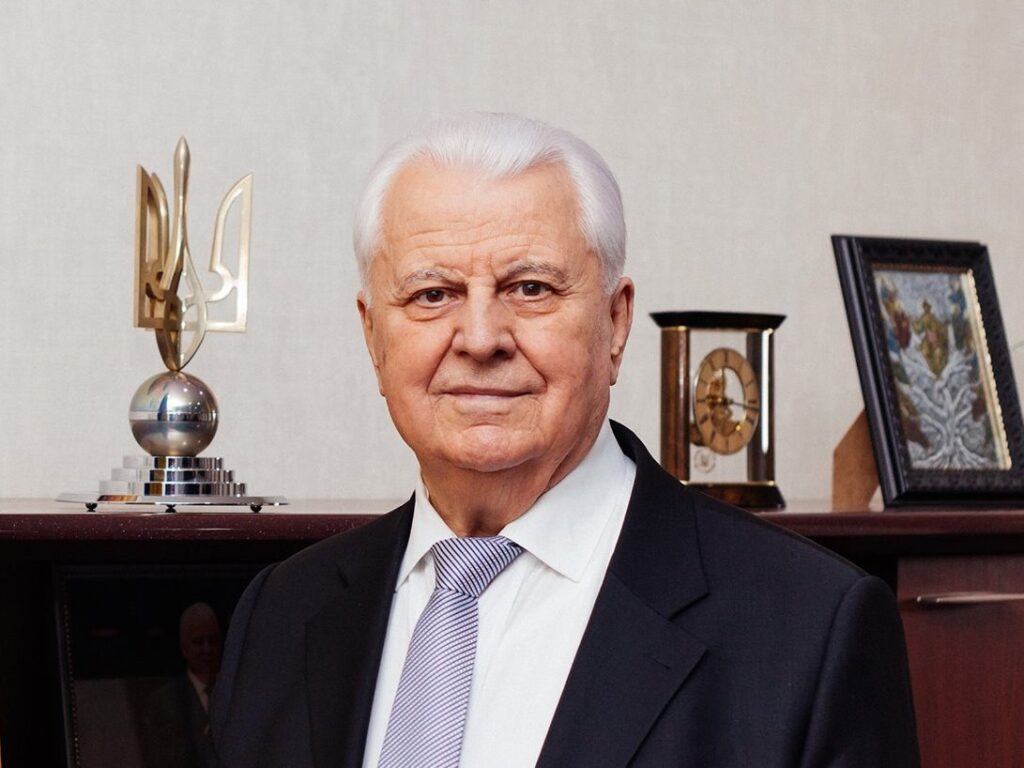
A watershed moment of 1991 is associated with his name. As Chairman of the Verkhovna Rada of the Ukrainian SSR, Leonid Kravchuk played a decisive role in adopting the Act of Proclamation of Independence of Ukraine on August 24, 1991, and subsequently in conducting the nationwide referendum on December 1, 1991, which confirmed the Ukrainian people’s aspiration for statehood. Elected the first President of Ukraine, he led the country from 1991 to 1994—a period marked by the establishment of the foundations of state sovereignty, international recognition, and the creation of key institutions of the new Ukrainian state.
Yet public service did not conclude his civic mission. In 1997, Leonid Kravchuk was elected Chairman of the Ukrainian Peace Council, a civic organization with long-standing traditions founded in 1951, and he remained in this role until 2022—effectively for more than a quarter of a century.
At the General Assembly of the Ukrainian Peace Council in Kyiv (1997), where he first addressed the organization as its Chair, Leonid Kravchuk outlined his vision of the peacebuilding mission of civil society, emphasizing that peace is not merely a political category but a condition of public trust. In this context, he articulated a thought that he would later reiterate in many public speeches: “Peace is not the absence of war. Peace is a state of society in which people trust one another and the state.”
Throughout the 2000s, speaking at national conferences of the Ukrainian Peace Council and at international meetings of peace organizations—particularly during international forums of the World Peace Federation and partner civic structures in Europe (2001–2010)—Kravchuk consistently developed the idea of peace as a process that cannot be imposed by force: “Peace cannot be imposed by force. It can only be built—through dialogue, culture, and mutual responsibility.”
People-to-people diplomacy occupied a special place in his leadership of the Ukrainian Peace Council. At the ceremonial events marking the 60th anniversary of the Council (Kyiv, 2011), Leonid Kravchuk emphasized the role of the intelligentsia, science, education, and culture in shaping a peaceful public consciousness.
After the onset of Russia’s aggression against Ukraine in 2014, in his addresses at Peace Council meetings and public discussions he particularly underscored the link between independence, security, and peace, warning against the illusion of “peace at any cost”: “Independence without peace is fragile. But peace without independence is an illusion.”
Between 2014 and 2021, addressing participants of peace initiatives, young people, and international partners, Kravchuk repeatedly stressed the moral dimension of peace and the responsibility of political elites: “Peace begins not with agreements but with values. If values are destroyed, no agreements will work.”
This worldview of Leonid Makarovych Kravchuk defined the activities of the Ukrainian Peace Council throughout his tenure—from educational programs and cultural initiatives to participation in international forums and humanitarian projects. For Kravchuk, peace was not a final state but a continuous process of moral choice requiring wisdom, patience, and national unity. His leadership of the Ukrainian Peace Council became a logical continuation of his life’s path—from a founder of Ukraine’s independence to its moral authority on matters of peace, concord, and responsibility to future generations.
Today, drawing on the worldview and civic legacy of Leonid Kravchuk, the Ukrainian Peace Council continues its work to reflect upon and shape the vision of post-war Ukraine—a peaceful, strong, and responsible European state. It was precisely during his chairmanship, in the years of Ukraine’s independence, that the Peace Council acquired a clear institutional form, defined its principal areas of activity, and focused them on the real needs of civil society, striving to bring these demands to the level of state decision-making. This vision concerns a country reborn not only through the reconstruction of what has been destroyed, but above all through faith in the individual—by developing education, science, innovation, and high technologies, while combining economic growth with national security. As emphasized in the Declaration of the International Forum “Education, Science, Innovation: Human Capital in the Post-War Recovery of Ukraine” (December 11–12, 2025, Kyiv), peace is not a compromise with weakness but the outcome of a strategic European choice: the building of a competitive, democratic, and secure Ukraine capable of being an active participant in the shared European space of peace, stability, and development.
Presidium of the Ukrainian Peace Council