

Oleksii Plastun, Valeriia Kotelnykova
Springer Nature is a leading global publisher. In 2022, alongside other major publishers, it signed the Multi-Publisher Statement and issued its own individual statement condemning the war and expressing support for Ukraine. Furthermore, Springer Nature announced it would cease new sales in Russia and Belarus.
It would seem to be the ideal position: supporting Ukraine not only in words (official statements of support) but also in deeds (suspending sales). But in reality, a significant gap exists between the company’s words and its actions.
It is difficult to reconcile the image of a company that has suspended marketing to Russian research organizations with one that has published – and continues to publish – around 200 Russian journals. Still, the fact remains.
Some might say, “Well, they publish articles – it’s science, physics and chemistry – so they’re outside the world of politics.” The fact is that many of these journals are owned by entities subject to sanctions; spread Russian propaganda, justify the annexation of Ukrainian territories, or feature fabricated editorial boards.
By publishing these titles, Springer effectively collaborates with sanctioned entities, potentially violating EU, US, and other international sanctions. For example, the journal Cosmic Research is the translated version of Космические исследования, published by the Institute of Space Research of the Russian Academy of Sciences, which is currently under US sanctions.
Is Springer Nature really that brazen? Obviously, they won’t directly violate the sanctions regime, so they’re using a rather simple workaround: the intermediary publisher Pleiades Publishing. In this way, Springer Nature does not formally violate the sanctions, as it is collaborating with an entity not subject to sanctions.
And at this point, perhaps, we should take a closer look at Pleiades Publishing.
Pleiades Publishing positions itself as an American company that, for historical reasons, publishes journals from the former Soviet republics of Eastern Europe and Central Asia. In reality, only 9 of the 177 Pleiades journals distributed by Springer were founded by non-Russian academic institutions.
In a public interview, Alexander Shustorovich, the head of Pleiades, acknowledged that his company had developed a scheme specifically designed to circumvent sanctions, allowing Russian journals to be published:
“Our scientific products, perceived as American, are preserved… We have created a very important precedent… Springer Nature and other colleagues helped us.” (Source)
In a June 2023 interview, Russian academician A. Zabrodsky revealed that the funds received from Pleiades/Springer exceed the state funding of these journals sixfold. Essentially, Western publishers are maintaining the infrastructure of Russian scientific editorial offices. To mitigate sanction risks, Pleiades legally re-registered the “founder” rights of 100 Russian Academy of Sciences (RAS) journals after 2020 – a move that carries the hallmarks of a scheme to obscure the true origin of the content (Source).
The Pleiades/Springer partnership, aside from the very fact that it violates sanctions, has a number of negative effects, ranging from facilitating the spread of propaganda and justifying the annexation of Ukrainian territories, to violations of the norms and principles of academic ethics, including the disregard of systematic scientific fraud within these journals, as well as the creation of scientific doppelgangers. We will discuss all of this in more detail below.
Mapping Annexation
Based on Scopus data, we have identified nearly 400 cases where Springer has categorized Ukrainian territories as part of the Russian Federation. This constitutes a form of “annexation propaganda.”
| 2022 | 2023 | 2024 | 2025 | Overall | |
| Sevastopol | 48 | 67 | 33 | 33 | 181 |
| Simferopol | 40 | 31 | 26 | 36 | 133 |
| Donetsk | 0 | 2 | 14 | 14 | 30 |
| Yalta | 0 | 1 | 0 | 6 | 7 |
| Kerch | 1 | 6 | 1 | 2 | 10 |
| Lugansk | 0 | 1 | 3 | 3 | 7 |
| Crimea | 1 | 3 | 0 | 1 | 5 |
| Mariupol | 0 | 0 | 0 | 1 | 1 |
| Kherson | 0 | 0 | 0 | 3 | 3 |
This “silent approval” by publishers has tangible consequences. In 2013, the share of publications where the Ukrainian city of Sevastopol was marked as being in the Russian Federation was 0%. By 2014, it rose to 43%, and by 2025, it reached 100%. This is a direct result of the policies of international publishers, including Springer – a silent justification of annexation.
Springer has even begun “legitimizing” the annexation of Kherson, despite the city currently being under Ukrainian control. A screenshot from the official Springer site shows this affiliation here:
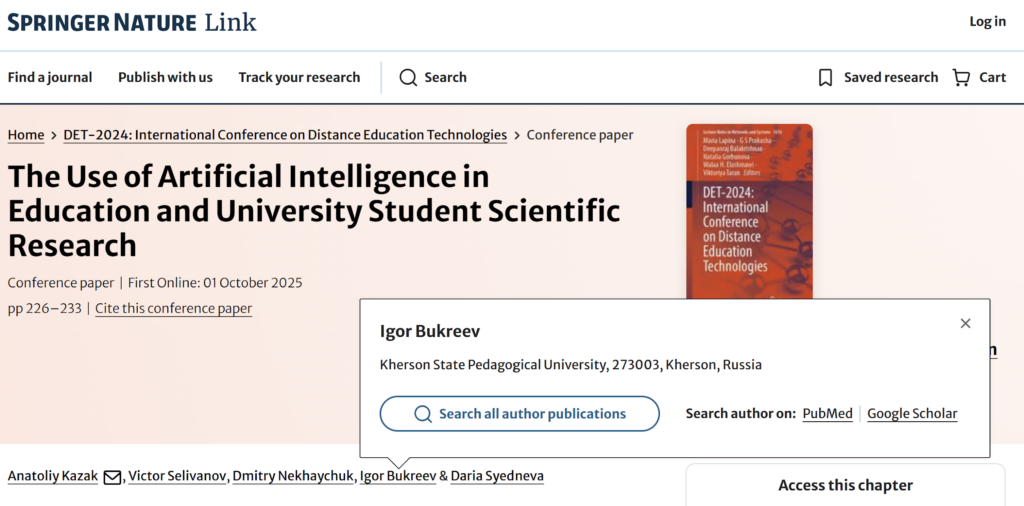
A screenshot from official Springer site: https://link.springer.com/chapter/10.1007/978-3-032-04365-8_23
When questioned, the publisher’s standard note remains:
“Springer Nature remains neutral with regard to jurisdictional claims in published maps and institutional affiliations.”
This is not the only form Springer justifies the annexation of Ukrainian territories by Russian Federation. For example, describing editorial board of the “Russian Journal of Coordination Chemistry” Springer on its official site mentioned that Ukrainian city of Simferopol this is a territory of Russia.
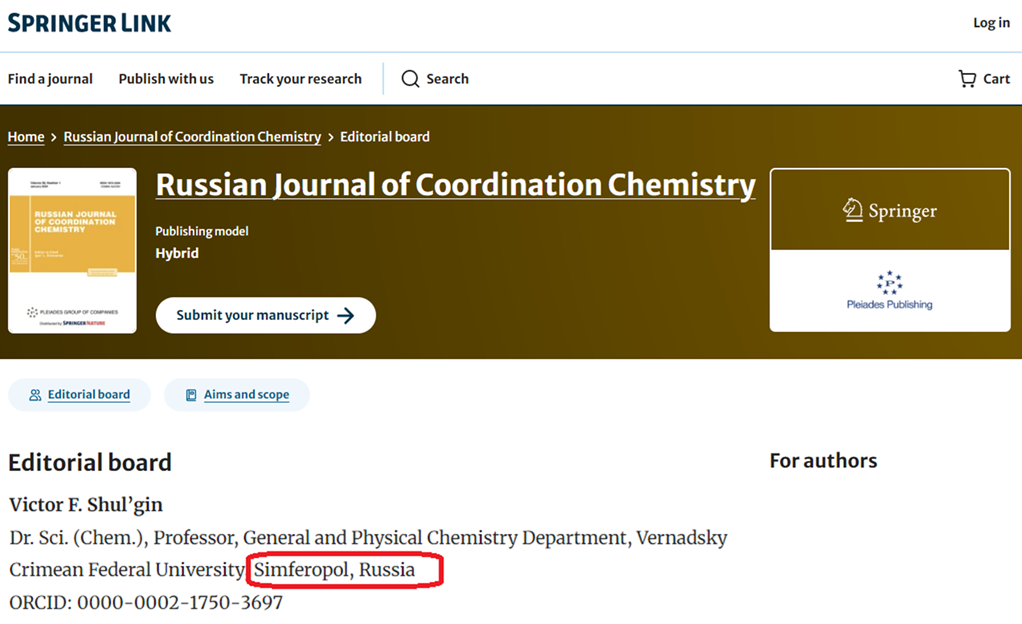
A screenshot from official Springer site: https://link.springer.com/journal/11173/editorial-board
Springer official position:
“As a company, we believe that politics should not interfere with the communication of scientific research. For this reason, our policy with respect to territorial issues such as those that you raise is one of strict neutrality. Because of this, we do not dictate the geographical naming conventions used by editors in their biographies.”
Ukrainian territory is not an issue; this is not a question as well. There is international law, for example, ISO 3166 “Codes for the representation of names of countries and their subdivisions”, where there is no place for neutrality. Simferopol is Ukraine, Donetsk is Ukraine, Kherson is Ukraine. Any opposite statements are violations of international law.
Institutional Theft
This “neutrality” extends to the legitimization of stolen Ukrainian universities. Through its collaboration with Pleiades, Springer identifies dozens of seized Ukrainian institutions as Russian. Examples include Ukrainian Pryazovskyi State Technical University (Mariupol), V.I. Vernadsky Crimean Federal University (Simferopol), Kherson State Pedagogical University (Kherson), Lugansk State Medical University named after St. Luke (Lugansk), Lugansk State Pedagogical University (Lugansk), Crimean Engineering and Pedagogical University (Simferopol), Sevastopol State University (Sevastopol) and many others are marked as Russian universities.
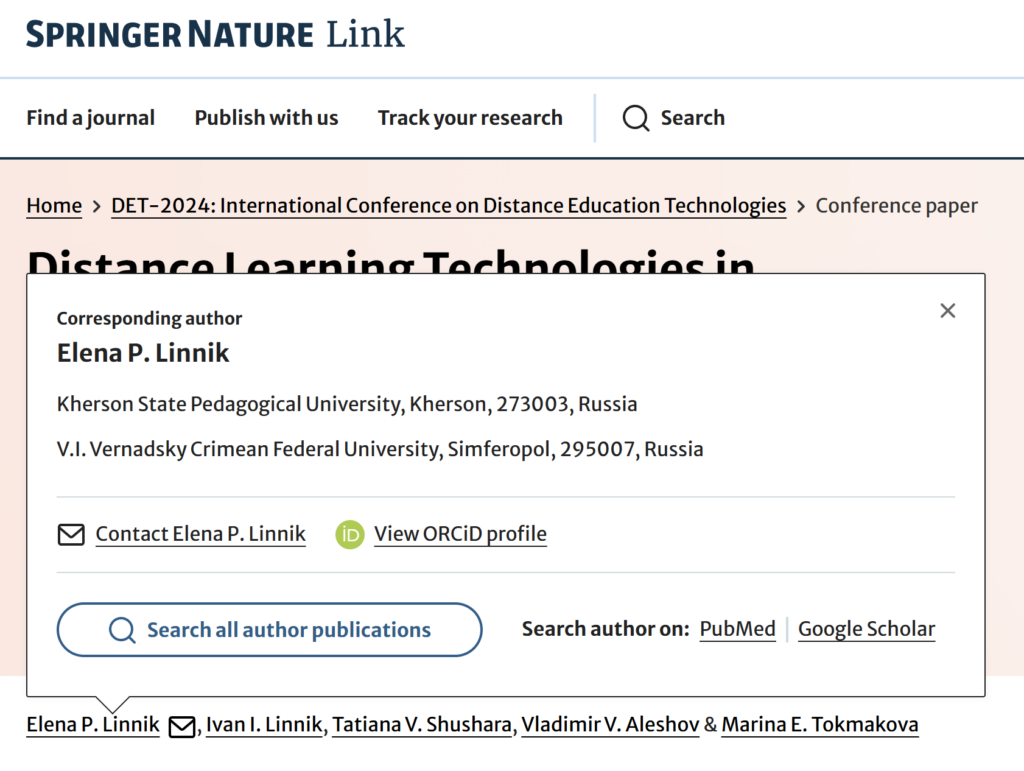
A screenshot from official Springer site: https://link.springer.com/chapter/10.1007/978-3-032-04365-8_29
The same applies to stolen research institutions, such as the Institute of Archaeology of Crimea (Simferopol), A. O. Kovalevsky Institute of Biology of the Southern Seas (Sevastopol), Marine Hydrophysical Institute (Sevastopol), Crimean Astrophysical Observatory (Bakhchysarai), Nikitsky Botanical Garden (Yalta) and many others.
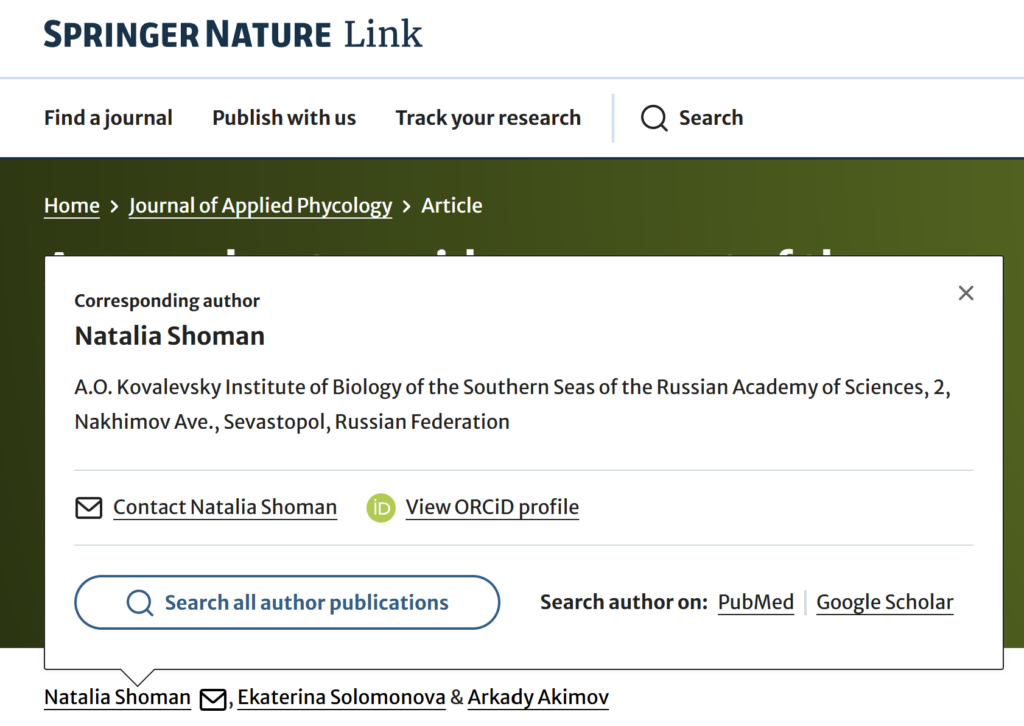
A screenshot from official Springer site: https://link.springer.com/article/10.1007/s10811-025-03672-0
Recent research titled “Dead Researcher Souls: an Analysis of Editorial Boards of Russian Journal” (Source) revealed that Russian journals frequently fabricate their editorial boards. Findings show that 70.9% of international board members were either unaware of their membership, did not fulfill duties, were retired, or were deceased.
Further details can be found in:
Plastun et al. (2026). Members’ misrepresentation practices: The case of Russian journal editorial boards. Knowledge and Performance Management, 10(1), 1-11. doi:10.21511/kpm.10(1).2026.01
This systematic fabrication exists within journals published by Springer/Pleiades, including Solid Fuel Chemistry, Russian Journal of Plant Physiology, Geotectonics, Steel in Translation, Russian Journal of Coordination Chemistry, Lobachevskii Journal of Mathematics, Physics of Metals and Metallography, Inorganic Materials: Applied Research, and dozens of other journals published by Springer in cooperation with Pleiades.
Cover-up of Sanctioned Leadership
While some journals fabricate their international editorial boards to artificially inflate their prestige with “dead souls”, others actively omit their real editorial leadership to evade international sanctions.
To bypass Western compliance filters, Springer and Pleiades deliberately obscure the true leadership roles of personally sanctioned individuals, as well as directors of sanctioned institutions, in the English-language versions of the journals. They achieve this either by completely removing these names from the platform or by deceptively downgrading Editors-in-Chief to the status of regular editorial board members.
A direct comparison between the official Russian versions of the journals and their English counterparts on SpringerLink reveals documented instances of this deceptive omission:
Case 1: Hiding Personally Sanctioned Individuals (Mikhail V. Kovalchuk)
Crystallography Reports and Nanobiotechnology Reports are English versions of the Russian journals Кристаллография and Российские нанотехнологии. In the original Russian versions, the Editor-in-Chief is prominently listed as Mikhail V. Kovalchuk (Source 1 and Source 2).. He is the President of the Kurchatov Institute and has been under personal sanctions by Canada (since September 2022) and the UK (since March 2023, Source) for his role in supporting the Russian government. However, on SpringerLink, his status is deliberately minimized. He is listed merely as a member of the “Editorial Committee,” while the Editor-in-Chief position is left vacant.
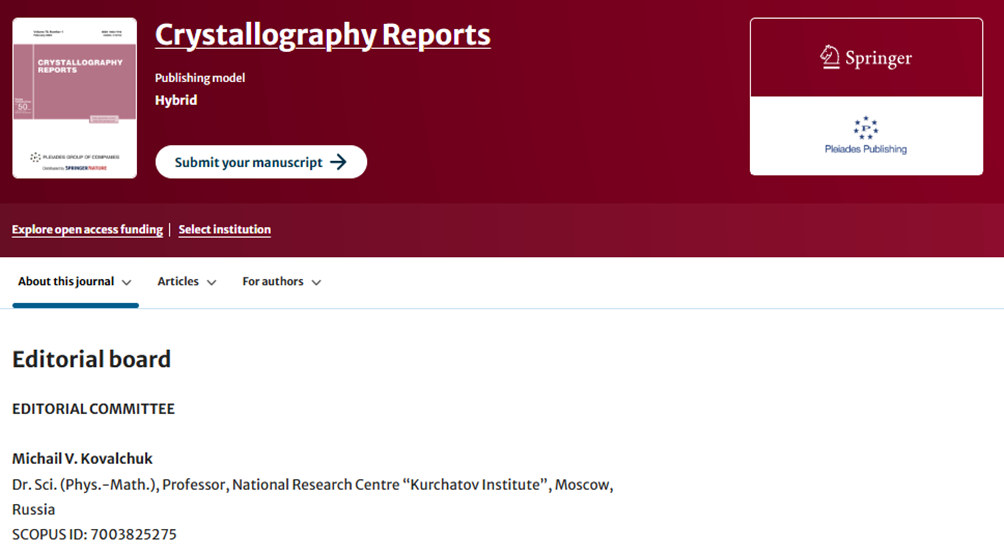
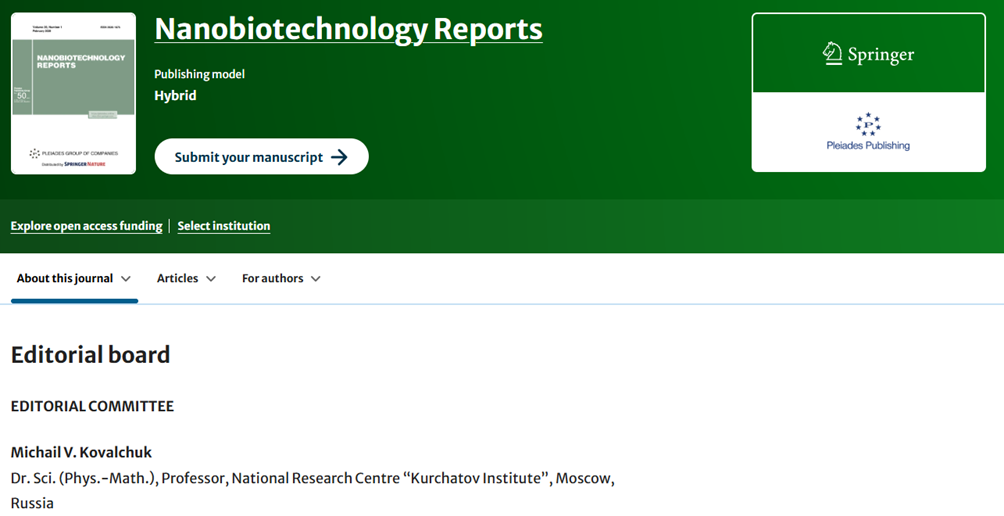
Screenshots are from official Springer site:
https://link.springer.com/journal/11445/editorial-board and https://link.springer.com/journal/12201/editorial-board
Case 2: Hiding the Directors of Sanctioned Institutions (Sergey V. Garnov)
For the journal Doklady Physics (translation of Доклады Российской академии наук. Физика, технические науки), SpringerLink displays a vague disclaimer: “Information on the editorial board is under development.” It is highly suspicious and legally indefensible for Springer Nature to claim they are still “developing” information on the editorial board of a journal they have been continuously distributing for decades. The Russian version clearly lists Sergey V. Garnov as the Editor-in-Chief (Source). Since 2018, Garnov has served as the Director of the A.M. Prokhorov General Physics Institute of the Russian Academy of Sciences. This institute is directly designated on the U.S. OFAC Treasury’s SDN list (Source). By scrubbing the name of the institute’s director from the international platform, the publisher conceals the journal’s direct leadership link to a sanctioned entity.
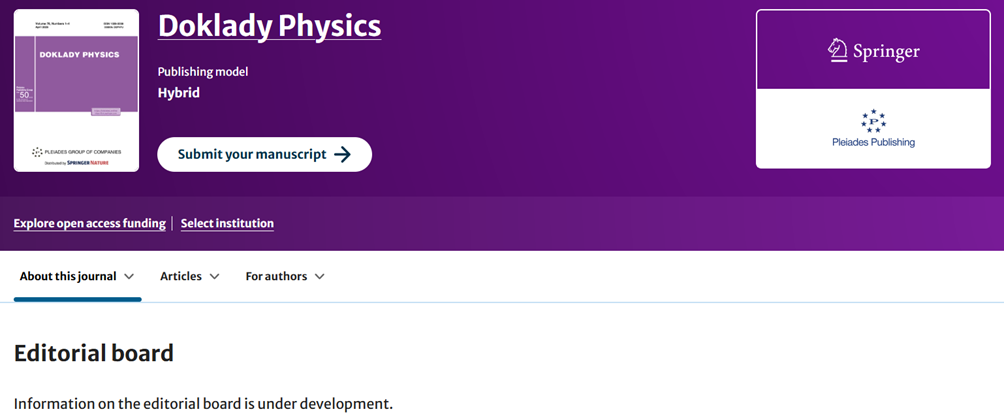
A screenshot from the official Springer site:
Cooperation with Sanctioned Entities
Springer’s partnership with Pleiades results in indirect cooperation with sanctioned organizations. For instance, Springer publishes the “Bulletin of the Lebedev Physics Institute” (Source), the translated version of “Kratkie soobshchenia po fizike” (Source). This journal belongs to the Lebedev Physical Institute (LPI), which is on the U.S. SDN list (Source) and is sanctioned by the EU (Source).
Furthermore, many journals are published by the Russian Academy of Sciences (RAS). Many RAS institutions are sanctioned by the USA (placed in SDN-list by OFAC – Source). The head of RAS, Gennady Krasnikov, is a member of the Security Council of the Russian Federation – the body that approved the invasion (Source).
A lot of Springer/Pleiades journals are published by Russian universities which have supported Russian aggression in Ukraine and actively help Russia to destroy Ukraine. For example, Lomonosov Moscow State University, which publishes the Moscow University Biological Sciences Bulletin via Springer (Source), publicly supported the war through the “Russian Rectors’ Letter” (Source).
Crucially, some Editors-in-Chief of Springer journals are themselves sanctioned. Viktor A. Sadovnichiy, Rector of Lomonosov Moscow State University and Editor-in-Chief of Differential Equations published by Springer/Pleiades (Source), is under Ukrainian sanctions for initiating the Rectors’ Letter in support of the aggression (Source).
Springer Nature’s platform is also used to distribute research specifically conducted to fulfill “state assignments” for sanctioned entities. Recent publications (2025) in journals such as Acoustical Physics and Bulletin of the Russian Academy of Sciences: Physics show a clear pattern of this cooperation. These papers explicitly state that the research was carried out to satisfy the state tasks of: Khristianovich Institute of Theoretical and Applied Mechanics of the RAS (US/UK sanctioned, Source), the Institute of Applied Physics of the RAS (US/EU/Switzerland/Canada/Japan sanctioned, Source), the Lebedev Physical Institute of the RAS (US/Switzerland/Canada/Japan sanctioned, Source), and the Kazan Scientific Center of the RAS (US sanctioned, Source).
The scale of this compliance failure is staggering. A brief, 30-minute search of just two journals in the Springer/Pleiades portfolio yielded 16 explicit examples of research performed under the state assignments of these sanctioned entities. This sample is merely a drop in the ocean; given the total volume of content, hundreds or even thousands of similar violations likely exist across other journals.
By providing these editorial and distribution services, Springer Nature and Pleiades are directly supporting the operations of sanctioned Russian institutes. Under US and EU law, providing such technical and business assistance to entities on the SDN list is a direct violation of international sanctions.

A screenshot from the official Springer site:
Academic Propaganda
Springer (thanks to Pleiades) provides a platform for blatant Russian propaganda. In the Herald of the Russian Academy of Sciences (Source), a paper titled “Zigzags of the Post-Imperial Syndrome” (Source) provides a full list of classic narratives of Russian propaganda to justify the war against Ukraine. Below are some quotes from this paper.
Whom should we blame for the start of war (p.494):
“First of all, it is the irresponsible, short-sighted, and openly provocative policy of the nationalist, European-integration-driven Ukrainian political elite, which over the past 17 years, with the support of extremist groups and Western countries, supplied it with weapons, has pursued an openly anti-Russian course, building a new Ukrainian identity and statehood based on it”
And of course, “bandera”, “nazis”, discrimination of the Russian language” and all other stains of Russian propaganda you supposed to find on Russian television, but not in academic paper published by respectful international publisher (p.495):
“The glorification of Bandera, discrimination against the Russian language, and calls for reprisals against the hated Muscovites became the norm of public consciousness and behavior supported by the Ukrainian authorities, forming the idea of Ukraine as a neo-Nazi state, which was used by the Kremlin as a justification for the subsequent military special operation.”
The publication of papers containing hate speech and war propaganda demonstrates a total collapse of the Peer Review process. No reputable editor would pass such text. This proves that Springer retains zero editorial control over Pleiades content, effectively selling its stamp of legitimacy to Russian propagandists.
Intellectual Property Theft and Journal Hijacking
Alongside the documented evidence of sanctions-related risks, Pleiades Publishing is involved in the systematic distribution of unauthorized “clone” journals, which raises serious concerns regarding intellectual property theft.
A primary example involves five journals owned by the Ioffe Physical-Technical Institute: Optics and Spectroscopy, Physics of the Solid State, Semiconductors, Technical Physics and Technical Physics Letters. In July 2022, the Ioffe Institute officially and unilaterally terminated all license agreements with Pleiades, legally revoking the publisher’s right to use the Institute’s trademarks and content. However, instead of ceasing operations, Pleiades Publishing began producing unauthorized “clone” versions of the journals, retaining the historic titles and ISSNs but bypassing the Institute entirely. To conceal the fact that the legitimate editors had resigned or were removed, both Springer Nature and Pleiades scrubbed the Editorial Board lists from their websites, replacing them with a vague disclaimer that “Information on the editorial board is under development.” The illegitimacy of this scheme was internationally confirmed in February 2023 by the UNESCO-affiliated ISSN International Centre, which designated the Ioffe Institute as the sole legitimate publisher of these titles (Source). Furthermore, in January 2026, the Russian Intellectual Property Court ruled that Pleiades had infringed on these trademarks, declaring their activities illegal and ordering over 460 million rubles in damages (Source). Consequently, the content currently being sold by Springer Nature under these titles is effectively a fake product distributed in violation of both international registry standards and intellectual property law.
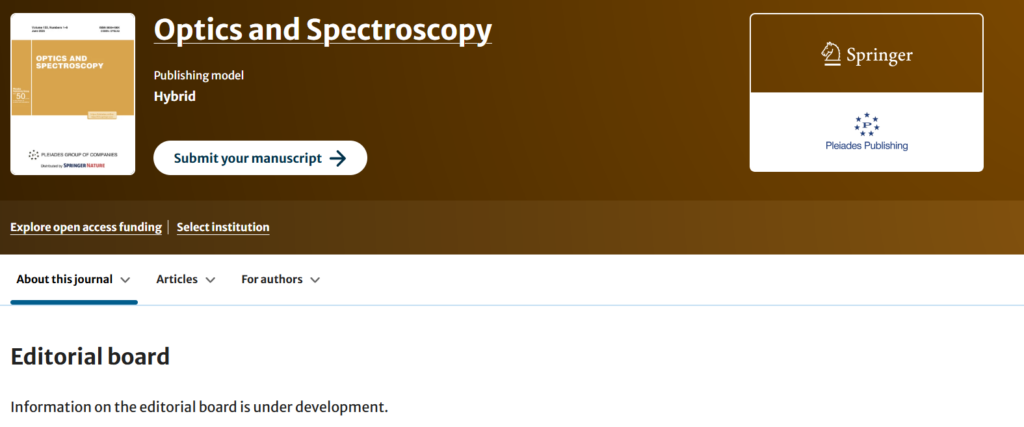
A screenshot from the official Springer site:
A similar pattern of institutional hijacking is evident in the case of the Journal of Experimental and Theoretical Physics (JETP). Since 2019, Pleiades has deceptively marketed JETP as an independent entity, removing references to its original founders and omitting the fact that the content was a translation of the Russian ZhETF. Following recommendations from the Russian Academy of Sciences in 2024, the legitimate editorial board of ZhETF ceased all cooperation with Pleiades (Source). Nevertheless, Springer continues to distribute a product under the JETP brand where the Editor-in-Chief and editorial board are entirely unknown to the scientific community. Ultimately, by exploiting the historic prestige of the ZhETF brand while severing all ties with its legitimate editors, Springer Nature is distributing an illegitimate “ghost journal” that misappropriates a scientific legacy to mislead the global academic community.

A screenshot from the official Springer site:
Bibliographic Inflation and the 3 DOI Problem
We conducted an audit of Pleiades Publishing’s portfolio and identified at least 70 Russian academic journals that systematically generate three different digital identifiers (DOIs) for a single scientific article.
The first identifier is assigned to the English-language translation, which is distributed internationally through Springer.
The second identifier is assigned by the Russian Academy of Sciences for the Russian-language version of the article. It is physically indicated on PDF files but is not registered in the international Crossref database and remains inactive (hereinafter referred to as “fake”).
The third identifier is registered by the Russian state publishing house “Nauka.” It links to web pages stating that both language versions are available, but in reality, only the Russian-language file can be downloaded, which features the inactive fake identifier from the RAS. Therefore, we will refer to the third identifier from Nauka as a phantom identifier.
During the registration of the third phantom identifier in the Crossref database, incomplete metadata is recorded. In particular, entries for articles with multiple co-authors list only a single author. Additionally, the system does not create the required cross-references that would technically link the original article to its translation. As a result, the same paper exists in the global database under different, unrelated digital records.
The problem of three DOIs illustrated by a single article:
- International DOI 10.1134/S0003683824608114

- Fake DOI 10.31857/S0555109925030021 physically printed on the article pdf
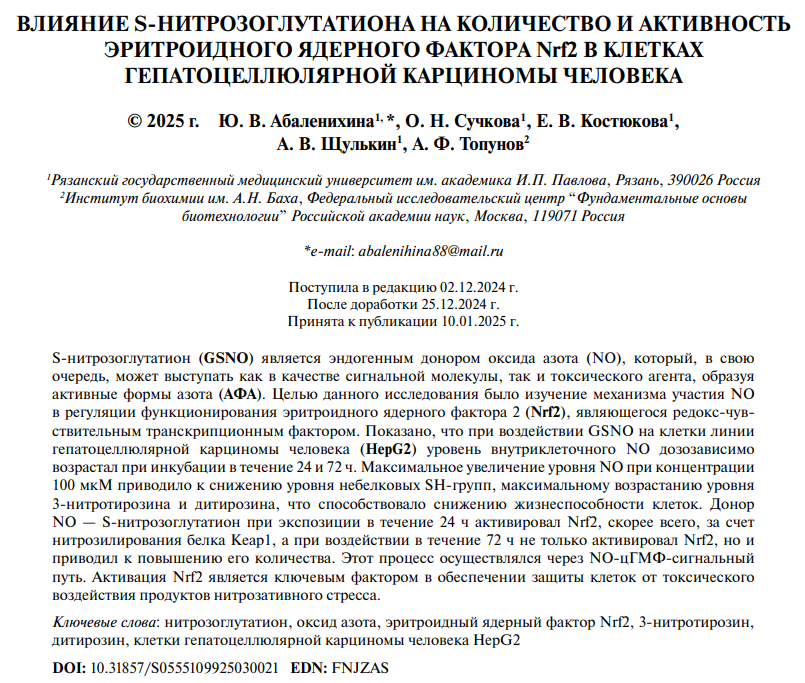
- Phantom DOI 10.7868/S3034574X25030021

For the global scientific community, this practice undermines the fundamental principle of “one object, one identifier.” Duplicate entries pollute global databases, causing search algorithms to treat a single article as several independent works. As a result, this artificially inflates the publication metrics of Russian institutions and fundamentally compromises the reliability of global scientific statistics.
Shadow Payment Channels and Financial Non-Compliance
The evidence of systemic malpractice is further compounded by the discovery of a financial network designed to mislead banking institutions and circumvent international monitoring. The webpage titled “How to Receive Royalties” (Source), accessible exclusively on the Russian-language version of the Pleiades website, reveals a mechanism for disguising commercial payments. Authors are provided with options to receive royalties through specific banks – Raiffeisenbank or the Asian-Pacific Bank. Crucially, for the latter, the publisher mandates that accounts must be formally attached to a “salary project” (зарплатный проект) belonging to an entity named Gertal Holding Limited. By processing independent researchers through a payroll system for a company that does not employ them, the publisher effectively falsifies the nature of the transaction. This is a deliberate tactic to disguise commercial royalty transfers as routine corporate payroll, which typically bypasses the rigorous anti-money laundering (AML) and compliance filters applied to cross-border commercial payments.
The direct connection between the publisher and this intermediary is confirmed by the provided contact email, gertal@pleiadesonline.com, which utilizes the publisher’s own corporate domain. The non-independent status of Gertal Holding Limited is further evidenced by its leadership and direct corporate ties to the publisher’s core operations. Aleksandr Petrakov, who serves as the director of Gertal Holding Limited (Source), is concurrently the General Director of LLC “Megapolis” in Moscow. Official Russian corporate records reveal that LLC “Megapolis” is directly owned by the US-based Pleiades Publishing, Inc. This overlap in leadership and ownership proves that Gertal Holding Limited is an internal administrative arm of the Pleiades corporate group rather than a third-party service provider.
The publisher intentionally hides this system from its Western partners. These instructions exist exclusively on the Russian version of the website and are completely absent from the English version. This deliberate omission ensures that international auditors and regulators remain unaware of this shadow payment channel used to move money into Russia. The use of an offshore vehicle Gertal Holding Limited in Cyprus, combined with the fraudulent labeling of payments as “salaries,” demonstrates a systematic effort by Pleiades to deceive the global financial monitoring system and maintain a shadow payment channel, exposing their global partners to severe regulatory and compliance risks.
Conclusion
As we can see, the consequences of bypassing sanctions in science are diverse in form and carry many negative effects. What are the options for addressing this?
One approach is to draw attention to the subject, thereby increasing the toxicity of collaboration with Russia and the violation of sanctions. In the context of the partnership between Springer Nature and Pleiades, the necessity of this discussion is specifically highlighted by Springer Nature’s October 2024 IPO prospectus, which stated in Section 1.5.6:
“The term of our current distribution agreements with Pleiades runs until December 2026…” (Source)
This implies that Springer Nature has the option not to renew its distribution agreements with Pleiades Publishing and to cease all cooperation with this entity.
It is evident that the company needs to be “nudged” toward such a decision. This publication is precisely such an attempt—an effort to bring attention to the problem and to make Springer understand that continued cooperation with Pleiades Publishing is becoming increasingly toxic for Springer from both a reputational and legal standpoint.
Conclusion (alternative version)
As we can see, the consequences of collaborating with Russian entities go far beyond academic ethics – they include circumventing international sanctions, financial fraud, and the destruction of global database infrastructure. To address this issue legally, the Ministry of Education and Science of Ukraine sent an official request and a detailed analytical memo to Springer Nature’s management; the materials from this memo form the basis of this article. On February 28, 2026, the Ministry received confirmation from the publisher that the documents had been received.
A month has passed. Has Springer Nature provided an official response to the Ukrainian ministry’s legal inquiry? No. What did the reputable European publisher do instead? The text of the confidential letter from the Ministry of Education and Science of Ukraine ended up in the hands of Russian propagandists. The materials from the request appeared on propagandist Yunashov’s site (Source) and on “RIA Novosti” (Source). The latter serves as a voice for the Kremlin and is subject to such strict European sanctions that its website cannot be accessed in Europe even with a Serbian VPN.
This leak raises a logical question: is science truly “apolitical” for Springer Nature? When a European publisher turns a blind eye to database manipulation and ties to sanctioned institutions, one could cynically attribute it to business interests. But when official legal correspondence ends up in the hands of Putin’s propagandists, the myth of “academic neutrality” finally crumbles.
In its October 2024 IPO prospectus, Springer Nature stated in Section 1.5.6:
“Our current distribution agreements with Pleiades remain in effect until December 2026…” (Source)
In other words, Springer Nature may choose not to renew its distribution agreements with Pleiades Publishing and may cease all cooperation with this entity. The decision on whether to renew this contract will finally reveal to the global community who the European publishing giant truly is: a leader in global science that abides by the law, or a conscious accomplice to Russian propaganda and a convenient tool for circumventing sanctions. The time for hiding behind the convenient illusion of “science beyond politics” is over.